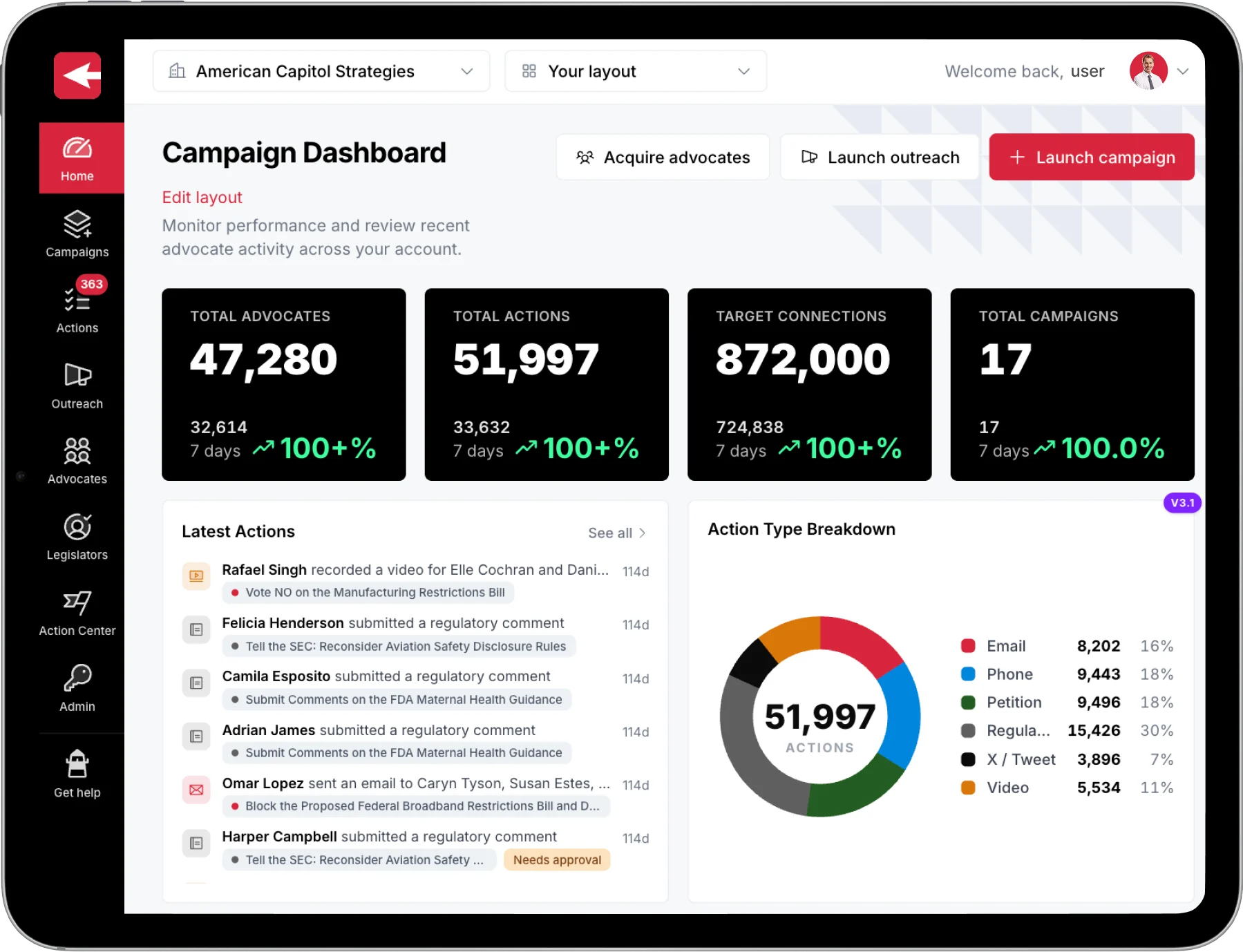












In today’s fast-moving digital landscape, advocacy campaigns need more than traditional tactics to succeed. Whether you’re representing a corporation, association, or issue advocacy group, your ability to influence policy and mobilize supporters depends on the tools you use, and that’s where advocacy software comes in.
The right software helps you organize grassroots efforts, streamline communications, and scale your campaigns efficiently. But with so many platforms out there, it’s easy to choose the wrong one. This checklist covers the key “do’s and don’ts” to help you avoid common pitfalls and get the most out of your advocacy tools.
What is Advocacy Software?
Advocacy software includes digital tools that help organizations manage campaigns, reach supporters, engage lawmakers, and deliver results. It streamlines outreach, automates repetitive tasks, and offers data analytics to sharpen your strategy.
These tools are especially critical in industries like consumer products, gaming, pharma, and tobacco, where proactive lobbying and grassroots mobilization are key to protecting business interests.
But success isn’t just about having the tools; it’s about knowing how to choose, integrate, and use them effectively. That’s where this checklist comes in.
Advocacy Software Do’s
To get the most out of your advocacy efforts, start with these key “do’s” when evaluating and using advocacy software.
1. Identify Your Priorities Before Selecting a Platform
Begin by defining your campaign’s goals. Are you mobilizing supporters, educating stakeholders, or contacting legislators directly? Each objective demands different platform features, so clarity upfront is essential.
For instance, a campaign targeting regulatory threats might need tools for direct lawmaker outreach, while a mass grassroots effort may require strong personalized messaging capabilities.
2. Look for Must-Have Features
Look for platforms with features that align with your needs. Must-have capabilities include:
- Personalized Messaging: Send tailored communications via email, SMS, and social channels.
- Analytics & Reporting: Track performance in real time, including open and click-through rates.
- Automation: Save time with workflows that handle repetitive tasks.
- Scalability: Ensure the platform can grow with your campaign without sacrificing performance.
- Integrations: Choose tools that work seamlessly with your CRM and other systems.
These tools are particularly effective for organizations with politically conservative audiences where precision in messaging and execution is critical to long-term success.
3. Compare Different Platforms Thoroughly
Don’t skip the comparison stage. Carefully evaluate each platform using these criteria:
- Ease of Use: Your team should be able to navigate and deploy campaigns quickly.
- Value Over Price: Look beyond cost and focus on long-term value and reliability.
- Reputation: Read testimonials and case studies to see how the platform performs in real-world campaigns.
- Customer Support: Strong onboarding and responsive support are critical for success.
Whether you’re running campaigns for industry advocacy or public education, a thorough comparison ensures the platform matches your strategic needs.
4. Ensure Scalability
Advocacy campaigns can grow fast, especially when tied to legislative or regulatory shifts. Your software should grow with you.
Scalable platforms make it easy to expand outreach without losing message quality. Whether you’re running a national campaign or a multi-state initiative, scalability ensures consistent performance at every stage.
5. Prioritize Data Security
Advocacy campaigns often handle sensitive data, from contact details to survey responses. Prioritize platforms with strong security protocols.
Look for tools that comply with privacy laws and offer built-in encryption. Protecting your supporters’ information isn’t optional; it’s essential for maintaining trust and credibility.
Advocacy Software Don’ts
Avoiding the wrong software is just as important as choosing the right one. These common mistakes can cost you time, results, and credibility.
1. Don’t Overlook Usability
If your platform is too complex, it slows everything down. Complicated setups and steep learning curves delay campaigns and frustrate your team.
Instead, choose a clean, intuitive interface that supports fast onboarding and smooth execution.
2. Don’t Choose Based Solely on Price
Going with the cheapest option often means sacrificing critical features or customer support. Low-cost platforms can limit your ability to grow or respond quickly.
Focus on value. Choose software that balances performance, scalability, and reliability, even if it means paying a bit more upfront.
3. Don’t Ignore Reporting and Analytics
If your platform doesn’t track results, you can’t improve. Weak analytics make it impossible to measure impact or adjust in real time.
Choose software with real-time dashboards and smart reporting features. Metrics like open rates, click-throughs, and audience engagement should be at your fingertips.
4. Don’t Forget About Integration
If your advocacy software doesn’t sync with your CRM or email tools, it slows everything down. Disconnected systems lead to data silos and workflow headaches.
Choose a platform that integrates easily with your existing tech stack, so your team works smarter, not harder.
5. Don’t Skimp on Customer Support
Poor onboarding and weak customer service can derail even the best software. Without solid support, you’re left figuring things out on your own.
Work with vendors who offer responsive support, thorough training, and a clear path to success.
Key Factors for Advocacy Software Selection
Choosing the right advocacy software means looking beyond surface-level features. These core factors will determine how well a platform serves your long-term goals:
Performance Tracking
Your software should offer built-in tools to measure campaign success. Metrics like engagement rates, conversions, and supporter response are essential to proving ROI and making informed adjustments.
Targeting & Segmentation
Effective platforms allow you to segment audiences and deliver tailored messages that speak directly to their interests, whether you’re reaching voters, customers, or lawmakers.
Industry Alignment
Every industry faces unique challenges. Whether you’re educating stakeholders or pushing back against regulations, choose software designed to meet the needs of your sector.
Common Advocacy Platform Mistakes to Avoid
Before you make a final decision, keep these five common mistakes in mind:
- Choosing platforms that can’t scale with growing campaigns.
- Skipping training and onboarding support.
- Ignoring customer reviews and real-world feedback.
- Using tools that are too complex for day-to-day use.
- Overlooking integration with existing systems like your CRM.
Avoiding these pitfalls helps you select a solution with confidence and ensures your team is set up for success.
Conclusion
Advocacy software is a game-changer for organizations looking to streamline outreach and drive results. With the right tools in place, and by following these key do’s and don’ts, you can run smarter campaigns that influence policy and mobilize supporters at scale.
Today’s top platforms offer personalized messaging, strong data security, campaign analytics, and room to grow. Avoiding common mistakes ensures your campaigns stay efficient, effective, and impactful.
Ready to upgrade your advocacy strategy? Explore how CiviClick can help take your campaigns to the next level with advanced, AI-powered tools built for real results.